


Dr. G Y Raju Ph.D. (IIT BHU)
Founder & CEO, Yatriverse · Guest Faculty, Osmania University
I help students and parents replace career confusion with career direction, using science rather than opinion. I spent a decade studying how people perform and make decisions, and I now use that research to help families choose a career instead of chasing one.
- Ph.D., IIT (BHU) Varanasi
- Certified Career Counsellor
- 15 research publications
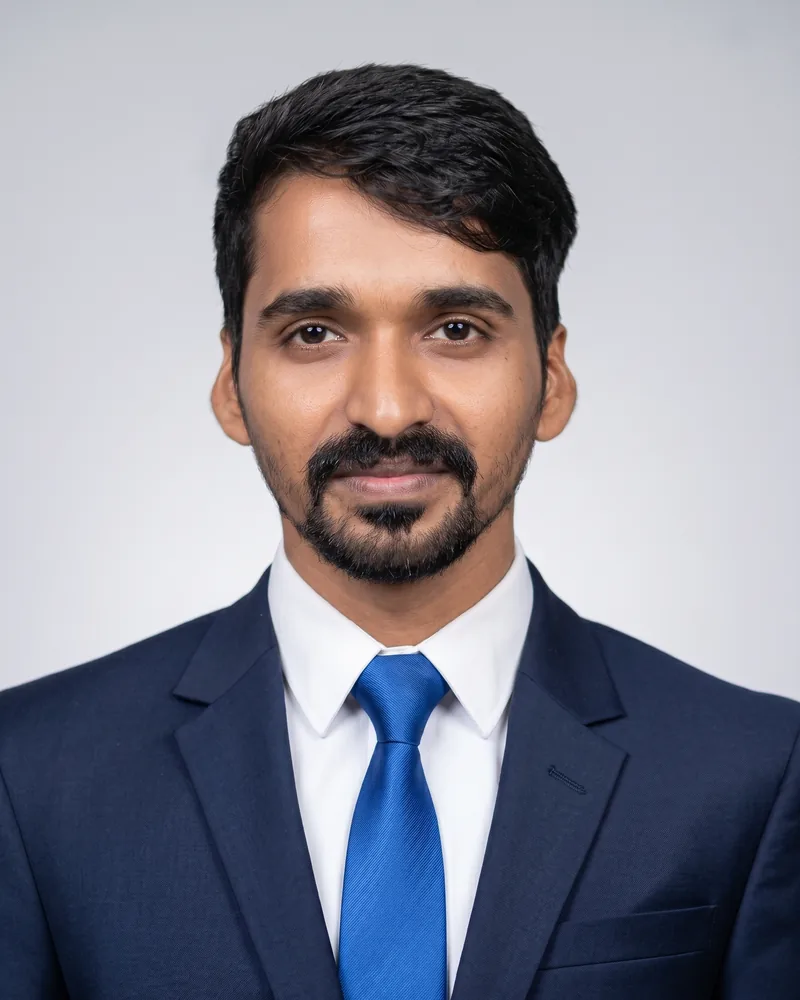
A researcher of human performance, now helping students find theirs
My Ph.D. at IIT (BHU) Varanasi asked a simple question: can we tell, from how a person thinks and responds, how well they will perform at a task? I answered it with EEG data, psychometrics and machine learning, and published the work in international journals.
At Yatriverse I brought the same rigour to career guidance. I designed our career-assessment model, which weighs a student’s aptitude, interests, values and academic fit. I also built tools that track job-market trends, so our recommendations reflect where careers are heading, not where they were ten years ago.
I have taught engineering students at IIT (BHU), Osmania University and Kakatiya University, so I know what a student’s first years in a course actually look like. That helps when a family is weighing one path against another.
“Our goal is simple: clarity today, so there’s no confusion tomorrow.”
The Career Counseling handbook
I wrote a practice handbook that sets out how every Yatriverse counselling session runs: its structure, the questions we ask, how we map interests and values to courses in India, and the ethics we follow. Every counsellor on our team works from it.
Who I work with
- Class 9–12 students choosing a stream or entrance exam
- College students deciding on a specialisation, higher studies or studying abroad
- Parents who want an objective view of their child’s strengths
- Professionals considering a change of career
A session built on evidence, not guesswork
Every session follows the same five steps, so you leave with a plan you helped write, not a verdict handed to you.
- 1
Preparation
I review the student’s background and results in advance and set a clear objective for our time together.
- 2
Explain & consent
What the assessment measures, what it can and cannot tell us, and how your information stays confidential.
- 3
Feedback & discussion
We go through the results visually and talk them over: which ones feel true, and which don’t.
- 4
Build the plan
Together we agree on the top two or three career areas and the specific next steps for each.
- 5
Follow-up
You get a written summary, and we book a review session to check how the plan is going.
An honest note: no test can predict who will succeed. What a good assessment does well is show what you enjoy and what you are comparatively good at, and that is where good decisions start.
Education & experience
Education
- 2024Ph.D., Indian Institute of Technology (BHU), VaranasiThesis: Prediction of human performance using EEG data to improve safety and productivity
- 2017M.Tech., Mining Engineering, IIT (BHU), VaranasiSimulation-based human reliability assessment
- 2013B.Tech., Mining Engineering, Kakatiya University
- Cert.Certified Career Counsellor
Experience
- 2024–nowFounder & CEO, YatriverseDesigned the career-assessment model. Runs workshops and one-to-one counselling for students and parents.
- 2025–26Guest Faculty, University College of Engineering, Osmania UniversityDrilling & Blasting (B.Tech.), Mineral Economics & Investment (M.Tech.)
- 2024–25Guest Faculty, University College of Engineering, Kakatiya UniversityIntroduction to Numerical Modelling in Mining
- 2018–23Teaching Assistant, IIT (BHU), VaranasiReliability Engineering and Data Analytics (Master’s level)
- 2013–15Teaching Faculty, KLR College of Engineering & Technology
Research on how people perform, decide and stay safe
My work combines psychology, data and engineering: measuring cognitive capability, predicting performance and reducing human error in high-risk industries.
Human performance prediction
Using EEG signals and machine learning to predict how well a person will perform on an upcoming task.
Human reliability & error
Estimating human error rates and the behavioural factors behind workplace accidents.
AI for safety
Automated slope-failure forecasting and AI frameworks for safer surface mines.
Selected publications
- Yugaraju, G., Masood, M. M., & Gupta, S. (2025). A comprehensive approach to proactive performance assessment in safety-critical industries through EEG monitoring and advanced analysis. Computer Methods in Biomechanics and Biomedical Engineering. DOI
- Raju, G. Y., Gupta, S., & Singh, L. K. (2023). Prediction of human performance using EEG data to improve safety and productivity in the mines. International Journal of Reliability and Safety, 17(1), 40–54. DOI
- Gunda, Y. R., Gupta, S., & Singh, L. K. (2023). Assessing human performance and human reliability: A review. International Journal of System Assurance Engineering and Management, 14, 817–828. DOI
- Gupta, S., Kumar, P., & Gunda, Y. R. (2021). A fuzzy causal relational mapping and rough set-based model for context-specific human error rate estimation. International Journal of Occupational Safety and Ergonomics, 27(1), 63–78. DOI
- Kumar, P., Gupta, S., & Gunda, Y. R. (2020). Estimation of human error rate in underground coal mines through retrospective analysis of mining accident reports and some error reduction strategies. Safety Science, 123, 104555. DOI
Show all 15 publications
- Masood, M. M., Verma, T., & Raju, G. Y. (2025). Development of a filtered inverse velocity method analyser: A comparative study of smoothing filters in surface mines for optimisation of slope failure predictions. Journal of the Southern African Institute of Mining and Metallurgy, 125(8), 477–484. DOI
- Raju, G. Y., & Masood, M. M. (2025). Automated slope failure prediction in surface mines: Integrating onset detection with time-to-failure forecasting. Journal of Information Systems Engineering and Management, 10(47s), 400–408. DOI
- Arra, K., Gunda, Y. R., & Gupta, S. (2023). Development of a predictive model for workers’ involvement in workplace accidents in an underground coal mine. Sādhanā, 48, Article 63. DOI
- Masood, M. M., Verma, T., & Raju, G. Y. (2023). Developing a model for the identification of onset of failure of slopes in surface mines. Journal of Mines, Metals & Fuels, 71(3), 327–332. DOI
- Masood, M. M., Raju, G. Y., & Verma, T. (2022). Slope monitoring and failure prediction techniques in mines: A review. Journal of Mines, Metals & Fuels, 70(8), 171–181. DOI
- Ravikumar, A., Raju, G. Y., & Gupta, S. (2022). A machine learning study on the role of behavioral and demographic factors in mining injuries. International Journal of Reliability, Quality and Safety Engineering, 29(3). DOI
- Kumar, A., Raju, G. Y., & Gupta, S. (2020). Work-compatibility based accident prediction model for the workforce of an underground coal mine in India. In Human Interaction and Emerging Technologies: Future Applications (pp. 544–550). Springer. DOI
- Raju, G. Y., Masood, M. M., & Seervi, V. (2025). Artificial intelligence for determining threshold limit values in slopes of Indian surface mines: Framework development and review. International Conference, Centre of Excellence in Mining, MEAI Rajasthan Chapter & Hindustan Zinc Ltd., Udaipur.
- Masood, M. M., Raju, G. Y., & Seervi, V. (2025). Towards a just transition in India’s coal regions: Policy pathways for inclusive and sustainable energy futures. International Conference, Centre of Excellence in Mining, MEAI Rajasthan Chapter & Hindustan Zinc Ltd., Udaipur.
- Gunda, Y. R., & Gupta, S. (2017). Simulation-based human reliability modelling for safer mining operation. DEEP-16 International Conference, Department of Mining Engineering, IIT Kharagpur.
Let’s find the right path together
Start with the online assessment, or reach out to me directly with your questions.